All Categories
Featured

Winning the Credit Video Game in a Post-AI World
Table of Contents
- – Updating Credit Precision in 2026
- – Specific Patterns for Credit Counseling in Del...
- – Fact-Based Disagreement Documentation
- – The Function of Alternative Data in 2026
- – Strategies for Lender Direct-Negotiation
- – Identifying Common Reporting Inconsistencies
- – Maintaining Progress and Future-Proofing Credit
- – Final Ideas on Credit Management



Updating Credit Precision in 2026
The shift towards automated data processing has reached a brand-new peak in 2026, requiring a change in how consumers approach their financial records. For many years, individuals count on generic design template letters to challenge inaccuracies on their reports. In the existing year, those approaches hardly ever activate a manual review. The 3 significant credit bureaus now utilize advanced device finding out systems that can determine and dismiss boiler-plate design templates within seconds. Expert financial therapists stress that successful disagreements now need a more surgical method based on factual data points rather than unclear legal claims.Accuracy in 2026 is no longer practically getting rid of negative marks. It is about making sure every information-- from work history to the exact date of a last payment-- lines up across all 3 major reporting agencies. Mistakes typically happen when lenders utilize different software versions to upload data. These technical discrepancies produce "fragmented files" that can reduce a credit rating even if the payment history is perfect. Addressing these pieces needs an understanding of how information flows from the lender to the repository.
Specific Patterns for Credit Counseling in Delaware
Citizens trying to find a better financial standing have actually found that localized information trends matter. In Delaware, particular local loan providers have actually transitioned to real-time reporting designs. While this helps those who pay on time see instant score increases, it also suggests that any clerical error by a regional branch appears on a report nearly quickly. High-level counseling concentrates on identifying these real-time reporting lags. Success typically stems from competence in Financial Coaching throughout the examination stage. By identifying the specific minute an information packet was misidentified, consumers can require a correction faster than the standard thirty-day window.Professional strategies in 2026 also focus on the "City 2" format. This is the basic language utilized by financial institutions to communicate with bureaus. Many customers are unaware that a dispute is most efficient when it highlights a Metro 2 field error. For circumstances, if a lender reports a "Date of Last Activity" that does not match the "Date of First Delinquency" according to the specific code required by the bureau, the account should be fixed. Financial advisors in Delaware spend substantial time auditing these codes to discover disparities that the average individual would ignore.
Fact-Based Disagreement Documentation
The days of merely mentioning "this is not mine" are gone. In 2026, the concern of evidence has moved slightly due to the E-OSCAR (Electronic Online System for Total and Accurate Reporting) updates. Financial institutions now have access to digital "image repositories" where they can immediately pull a signed agreement or a payment scan to validate an account. To win a dispute, a consumer should supply proof that is equally digital and proven. This might include bank declarations revealing a cleared check that was never credited or a letter from an insurance provider confirming a medical expense was paid.Increased interest in Digital Consumer Relief Portal shows a wider shift towards data precision. When a conflict is submitted, it is designated a four-digit code by the bureau's AI. If the code is "001" (Not Mine), the system carries out an easy name and address match. If the customer offers a particular "002" (Account Not Joint) or "012" (Claims Account Closed) with supporting documentation, the system is required to path the file to a human private investigator. This human touch is where most professional therapists find their victories.
The Function of Alternative Data in 2026
Credit building in 2026 has actually broadened far beyond charge card and vehicle loans. Many bureaus now include "Level 2" data, which consists of lease payments, utility bills, and even subscription services. This is a double-edged sword. While it offers more methods to construct a favorable history, it likewise presents more opportunities for reporting mistakes. A missed out on garbage collection fee in Delaware might possibly look like a collection account if the service provider utilizes a third-party billing agency.Counselors recommend that customers frequently examine their "secondary" reports. These are smaller, specialized reporting agencies that track renter history and check-writing habits. Often, an error on a primary credit report stems from among these smaller databases. Remedying the source is frequently simpler than combating the main bureau, as the smaller agencies have less automatic defenses and are more responsive to direct queries.
Strategies for Lender Direct-Negotiation
Often the most effective way to manage a dispute is to bypass the bureaus entirely. In 2026, "Goodwill Removals" have been mainly replaced by "Accuracy Adjustments." Large banks and credit unions in Delaware have dedicated departments for data integrity. If a customer can prove that a late payment was brought on by a technical glitch on the bank's mobile app or a disturbance in the regional banking network, these departments can upgrade the internal record. When the internal record is fixed, the update naturally streams to the credit bureaus during the next reporting cycle.This method requires persistence and a clear proof. It is helpful to tape-record the dates and times of technical concerns or to keep screenshots of payment verification screens. People often try to find Coaching within Debt Relief to resolve stubborn reporting mistakes that the bureaus refuse to acknowledge. By dealing directly with the source, the consumer gets rid of the middleman and addresses the root of the problem.
Identifying Common Reporting Inconsistencies

Data entry remains a human process at some level, and errors are inevitable. In 2026, common errors include:.
- Replicate accounts where a debt was offered to a new collector but the initial creditor failed to upgrade the balance to zero.
- Incorrect credit limits that make a customer's utilization appearance greater than it really is.
- Combined files where data from 2 individuals with comparable names or social security numbers are integrated.
- Re-aging of old debts, which happens when a debt collector incorrectly changes the "date of very first delinquency" to keep a negative product on the report longer than seven years.
Each of these mistakes requires a specific legal citation under the FCRA. Writing a letter that points out Area 611 or Section 623 particularly signals to the bureau that the consumer knows their rights. This frequently results in a more thorough examination than a letter that just requests for "assistance" or "elimination.".
Maintaining Progress and Future-Proofing Credit
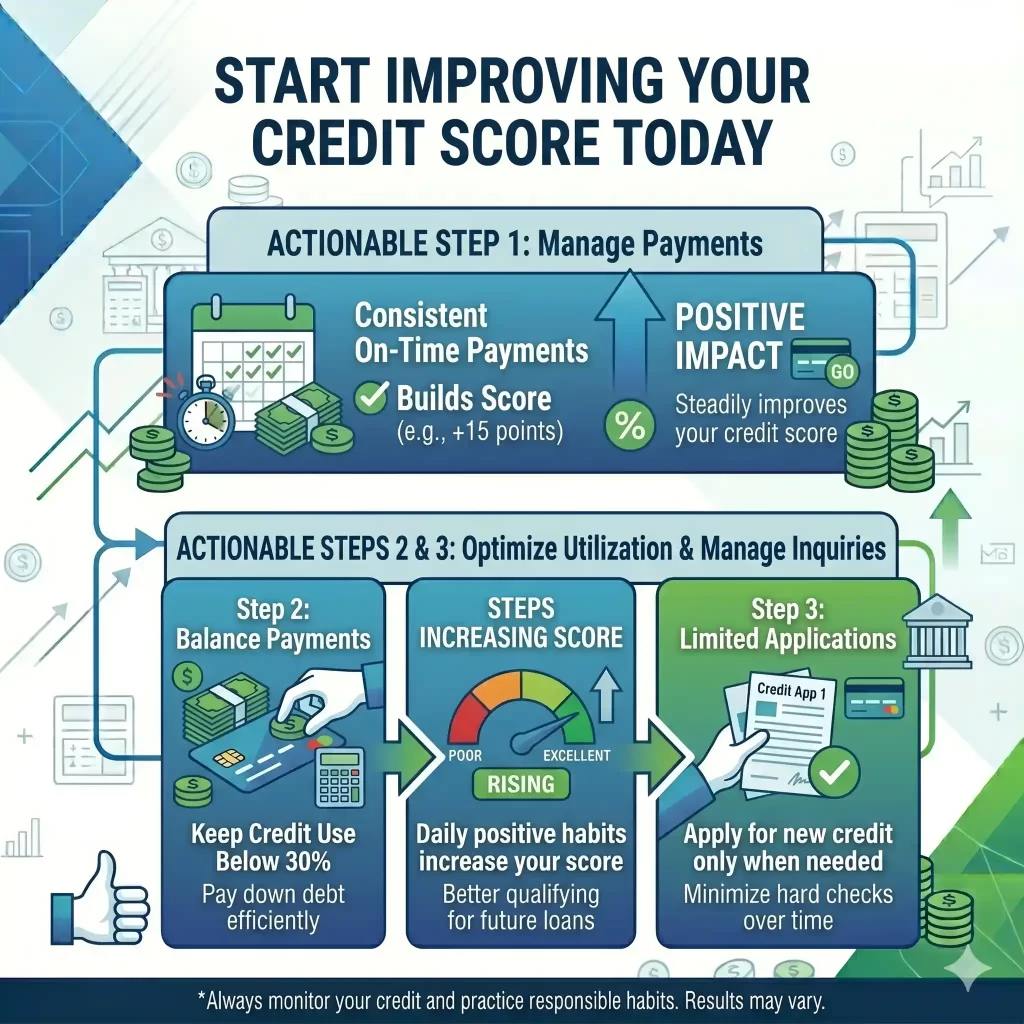
As soon as a disagreement is effective, the work is not ended up. The credit environment of 2026 moves rapidly. A deleted item can in some cases "re-pollute" a report if the financial institution's software is not updated. Tracking services are vital for catching these "zombie" accounts before they trigger significant damage. Expert financial counseling frequently consists of a three-to-six month follow-up duration to guarantee that corrected products stay corrected.Building credit in 2026 likewise includes tactical financial obligation management. Counselors advise keeping credit utilization listed below 7 percent, a much lower limit than the 30 percent suggested in previous decades. This change is because of the increased sensitivity of the newest scoring algorithms. High-limit cards ought to be utilized moderately, and balances need to be paid off several times a month to make sure the reported balance is constantly at its least expensive point.
Final Ideas on Credit Management
The path to a best score in Delaware includes a mix of technical knowledge and consistent follow-up. While the technology used by bureaus has actually become more intricate, the underlying concept remains the same: the law requires 100 percent precision. Whether a person is using a Credit Counseling or browsing the process alone, success comes to those who document every step and comprehend the digital systems behind the numbers. In 2026, the most powerful tool a consumer has is not just the law, but the information that proves their financial story is being informed correctly. Trustworthy credit is the foundation of modern-day life, and keeping that structure solid requires constant caution and an eye for detail.

Table of Contents
- – Updating Credit Precision in 2026
- – Specific Patterns for Credit Counseling in Del...
- – Fact-Based Disagreement Documentation
- – The Function of Alternative Data in 2026
- – Strategies for Lender Direct-Negotiation
- – Identifying Common Reporting Inconsistencies
- – Maintaining Progress and Future-Proofing Credit
- – Final Ideas on Credit Management
Latest Posts

Quick Credit Building Strategies 2026

Proven Ways to Fix My Credit 2026

A Guide to Improving Credit in 2026
Latest Posts
Quick Credit Building Strategies 2026
Proven Ways to Fix My Credit 2026
A Guide to Improving Credit in 2026